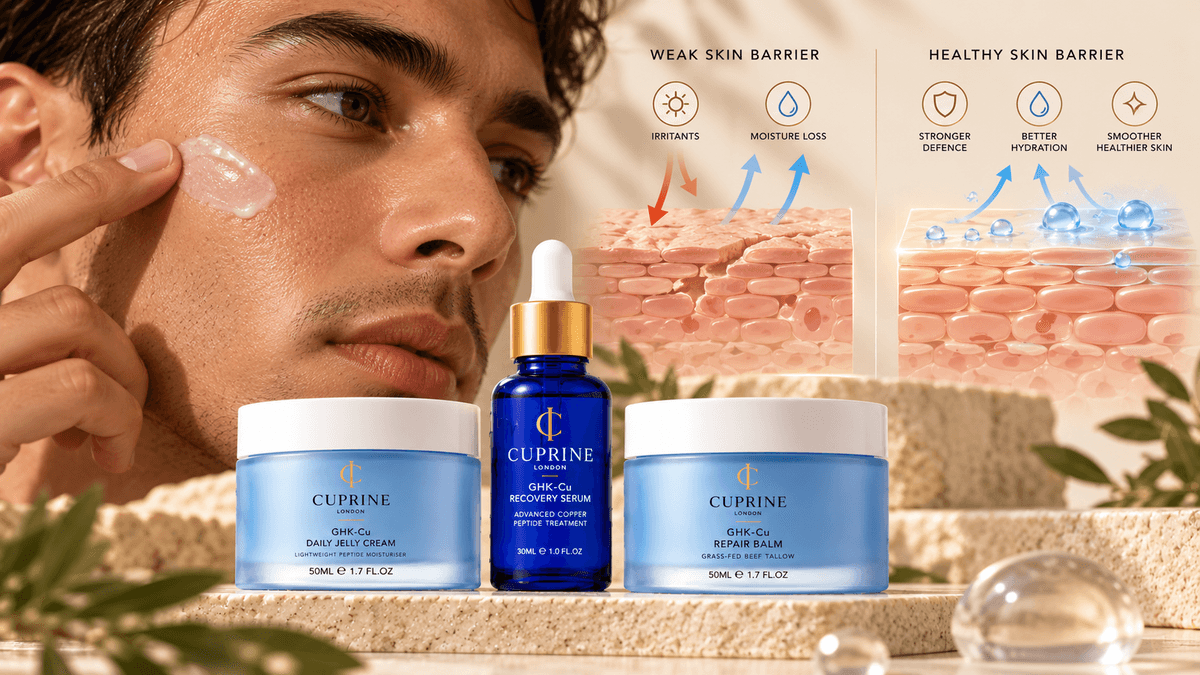
When people say their barrier is damaged, they usually mean something simpler and more useful: the skin feels tight, it looks dull, it stings when they put almost anything on it, and water seems to disappear out of it by the afternoon. The outer layer of the skin is there to keep water in and to keep irritants out. When that layer is unhappy, skincare gets harder, not easier, and the instinct to scrub or peel usually makes it worse. This is what that layer is, what commonly upsets it, and how a short GHK-Cu routine fits a face that needs comfort more than it needs another active.
The surface, in plain language
The outermost skin is a thin layer of cells in a mix of fats. Those fats, including ceramides and cholesterol, are what slow evaporation. On top of that, sebum from the skin’s own glands adds another film, built mostly from triglycerides and fatty acids. You do not need to memorise the chemistry to use it. You need to know that this surface is a living finish, not dirt, and that a cleanser which removes every trace of it has gone too far.
Water sits underneath that finish. Humectants such as glycerin and hyaluronic acid hold water in the upper layers. Occlusives, the richer creams and balms, slow the water from leaving. A routine that is only a watery serum can feel lovely for twenty minutes and tight by evening, because nothing is slowing the loss. A routine that is only heavy balm, with no water underneath, can sit on the skin and still leave it dehydrated. You want both. That is why Cuprine splits the serum from the jelly cream and, at night, the tallow balm.
How an unhappy surface actually feels
Tightness after washing, even when you have not been in the sun. Stinging from products that never used to sting. Flakes around the mouth and on the cheeks, sometimes with oil through the nose, which confuses people into buying a stronger cleanser. Redness that looks angrier at the end of the day. Makeup that catches on dry patches. None of these is a diagnosis. Together they are a reason to stop exfoliating and to put water and fat back, in that order.
A shiny face can still be a tight face. Oil and dehydration are not opposites. If you strip the surface, the skin can produce more oil while the water content stays poor. Treating that with more foam is how people end up with a face that is greasy and sore. The cream is the more boring and more useful response.
What commonly strips it
Foaming cleansers used twice a day until the skin squeaks. Grainy scrubs. Daily acids, especially if you already use a retinoid. Very hot water. Central heating and air conditioning. A long-haul flight. Fragrance and essential oils on skin that is already reactive. Forgetting sunscreen and then spending a weekend outdoors, which is a barrier problem and a dark-spot problem at the same time. Any one of these can be the reason a new serum “suddenly” stings. The serum may be meeting skin that was already angry.
Over-exfoliation is the modern version. The routine looks sophisticated and the face feels raw. If that is you, the sophisticated thing is to stop the acid for several weeks. Keep the cleanser gentle. Keep the moisturiser. You can come back to an exfoliant later if you still want it, two or three evenings a week, not every morning under a peptide.
Where a copper peptide routine fits
GHK-Cu is not an exfoliant. It does not dissolve the bonds between surface cells, and it does not require a period of flaking. Used regularly it can leave skin looking visibly smoother, soothe the look of redness, and reduce the appearance of dark spots. Those are cosmetic changes. They are not a claim that a bottle repairs a medical condition, and they are not a reason to keep using a product that stings.
The practical fit is that you can use the serum morning and night without planning a “recovery week”. The cream puts ceramides and oils over it, which is the part of the routine aimed at comfort and water loss. The balm is the richer night seal for places that still feel tight. If your skin is in a sore phase, start with cleanser, serum and cream only, and leave acids and new retinoids out. Read copper peptides versus retinol before you add vitamin A back. Read how to layer the serum so you are not rubbing the sore skin while you apply it.
A fortnight of doing less
If the face stings, give it two weeks of fewer products, not two weeks of different actives. Gentle cleanse. Serum, if it does not sting. If the serum stings too, pause it and use the cream alone until the skin is quiet, then try the serum again. Balm at night on the driest patches, in a thin layer. Sunscreen in the morning, chosen because it does not burn, not because it has a long ingredient story. No scrubs. No peels. No new essence.
You should feel the tightness ease before you see anything you would call a result. Comfort comes first. A visibly smoother look is a later question, on the timescale in eight weeks with GHK-Cu. If the skin stays hot, swollen, or broken, that is a doctor’s appointment, not a skincare article. We can talk about feel and appearance. We cannot treat a condition through a blog post.
What to keep once the skin feels quiet
Keep the short routine. The simple routine is written for exactly this reason: you can see what the skin is doing. Add the balm if mornings are still dry. Keep sunscreen. If you reintroduce an acid, do it slowly, at night, and stop if the stinging returns. Fragrance-free products make this experiment cleaner. Cuprine’s serum, cream and balm are fragrance-free and have no added alcohol. The cream does contain a silicone crosspolymer, so if you are avoiding silicones for your own reasons, read the INCI on the product page before you buy it.
The barrier is not a trend you fix with one expensive oil. It is the surface you stop insulting, then give water and fat, in an order the skin can use. Serum on clean skin, cream over it, balm last when you need it, sunscreen every morning. If that sounds plain, it is. Plain is what an unhappy surface usually needs.