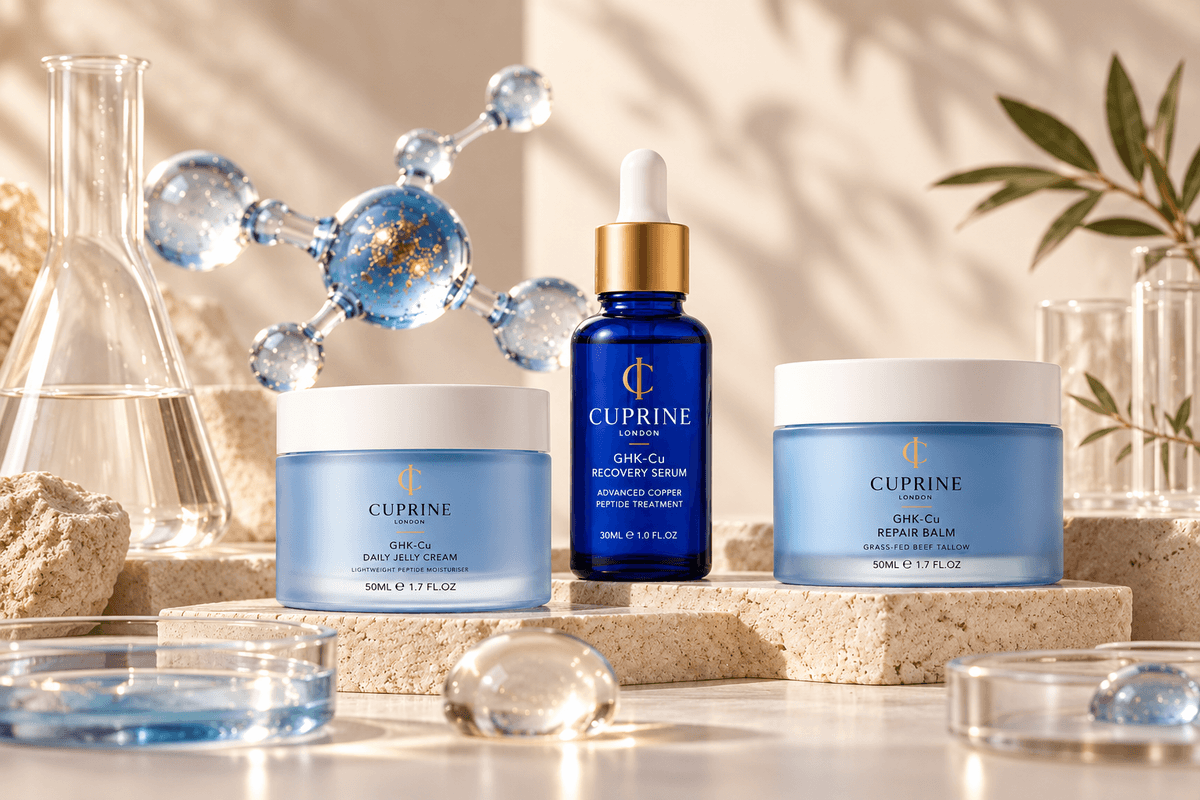
GHK-Cu is the reason Cuprine exists. It is in the GHK-Cu serum, the daily jelly cream and the halal beef tallow balm. On an ingredient list it appears as Copper Tripeptide-1. In the body it is a small piece of protein, three amino acids long, holding a single copper ion. Cuprine uses it for how skin looks.
What the name actually means
GHK stands for glycyl-L-histidyl-L-lysine. Glycine, histidine and lysine are three amino acids the body already uses to build protein. Bound together in that order they form a tripeptide. The Cu is copper, attached to the histidine. Copper on its own is reactive and awkward to deliver. Tied to the peptide, it has a carrier that skin and plasma already recognise.
Biochemist Loren Pickart isolated GHK from human plasma in 1973. The copper complex, GHK-Cu, is the form used in skincare. It is a peptide the body already makes, and then makes less of as the years go on.
Why copper needs a peptide
Copper is the mineral bound to this peptide. On its own, a copper salt is an awkward ingredient: it can be unstable and it can feel harsh. Bound to GHK, it is the form Cuprine uses in every formula, for a look that is visibly smoother.
Free copper salts are a poor way to put that mineral on the skin. They are unstable and they can irritate. GHK-Cu carries the copper in a peptide. With regular use, skin can look visibly smoother, it soothes the look of redness, and it reduces the appearance of dark spots. That is a cosmetic look, not a peeling or flushing step.
What it does once it is on the skin
Applied to the skin, GHK-Cu is not a scrub. It does not dissolve the bonds between dead cells the way a strong acid does, and it does not force the surface to turn over the way a retinoid does. The change you are looking for is a surface that looks visibly smoother. That shows up slowly, over weeks of morning and night use.
A comfortable routine sits alongside that smoother look. Skin that feels tight can also look dull. In a routine that includes a moisturiser, and at night a lipid balm, the peptide is not used alone. The serum goes on clean skin. The cream keeps water in. The tallow balm sits on the driest areas while you sleep. Together they soothe the look of redness and reduce the appearance of dark spots.
Why levels fall, and why that matters
People often notice the look of their skin changing with age: less smooth, more redness, and dark spots that stand out. A copper peptide routine is one way to care for that look. It is cosmetic skincare, and it is not a diagnosis.
Topical GHK-Cu does not restore your blood levels. It puts the same signal back on the tissue that is showing the loss. That is a narrower claim than “reverses ageing”, and it is a more honest one. You are giving skin a molecule it already knows how to read, at a time of life when it is reading less of it. Consistency matters more than dose. A pea of cream and two or three drops of serum, morning and night, beat a weekend of over-application.
How it differs from acids and retinoids
Acids and retinoids earn a smoother look by stressing the surface. Some skin tolerates that well. A lot of skin does not, especially if it already feels thin, if you are using several strong products, or if you simply do not want weeks of flaking. GHK-Cu takes the other route. It is used morning and night. It does not come with the daylight warning that sits on retinoid routines. It can sit under sunscreen and under makeup.
That does not make it a replacement for sunscreen, and it does not make every other active useless. If a retinoid already suits you, many people keep it at night and use copper peptide in the morning, rather than stacking both on the same damp face from day one. We wrote a longer comparison in copper peptides versus retinol. The short version is that they are both serious ingredients, and they ask different things of your skin.
How Cuprine uses it
Every Cuprine formula is built around Copper Tripeptide-1. The serum is the first step: a light, water-based fluid with glycerin, hyaluronic acid, panthenol and centella, so the peptide goes on before anything occlusive. The jelly cream repeats the peptide in a moisturiser, with ceramides, olive squalane and evening primrose oil, so you are not choosing between the peptide and hydration. The halal beef tallow balm carries it in a richer base for the last step of the night, when dry skin needs lipids more than it needs another watery layer.
The peptide itself is made in a lab. It is not extracted from blood, and it is not an animal ingredient. The tallow in the balm is a separate choice, from 100% grass-fed and finished cattle, and it is halal certified. If you want the copper peptide without tallow, the serum and the cream are the pair. If you want the full evening seal, the balm is there. The Regenerate Bundle is the three together.
How to use it, and what to expect
Cleanse, then press two or three drops of serum over the face and neck. Wait about a minute. Follow with cream. In the morning, finish with a broad-spectrum SPF 30 or higher. At night, warm a pea of tallow balm between your palms and press it on last if the skin is dry. The how to use guide walks through the order in more detail. More product does not speed the biology. A tacky film means you have used too much serum.
Hydration and a softer feel are the early changes, often within a few weeks. A look that is visibly smoother, with a softer look to redness and dark spots, takes longer. Give a morning and night routine eight to twelve weeks before you judge it. If the skin stings or stays red, stop and look at what else is in the routine. GHK-Cu is generally comfortable, including on sensitive skin, but no product suits everyone.
If you want the mechanism in shorter form, why we use GHK-Cu is the product page for the ingredient. If you want the formulas, start with the serum. The peptide is the same in each bottle. The texture is what changes.